

What Regulating Your Nervous System Actually Means with Chelsee Joel
The creator behind Conscious Seed on stress, devotion, & plant remedies

* ˚ ✦ East/West is a newsletter about the cultural roots of wellness and the tangible effects of wellbeing. Thank you for sharing, clicking ♡, and commenting on this post — you are keeping this project alive.


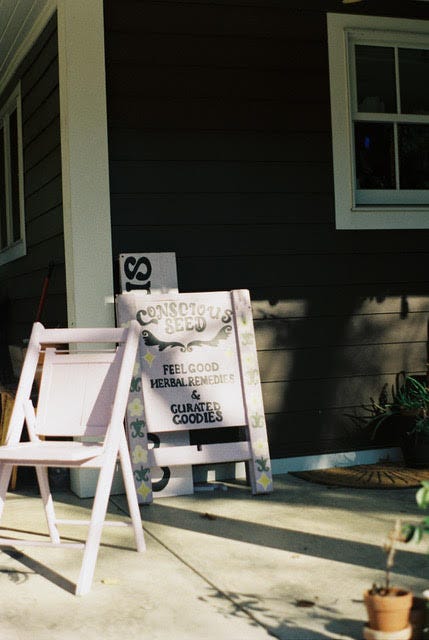
This week’s interview is with Chelsee Joel, the herbalist and creator of Conscious Seed, which crafts flavorful herbal blends for nervous system nourishment. Below, she offers her wisdom on everyday herbs, creating harmony between inner and external worlds, and more.
How did Conscious Seed begin?
I grew up with a holistic mom taking me to different metaphysical groups and gatherings. My mom was vegetarian when I was a kid so then I became vegetarian for half of my life.
But truly [Conscious Seed] began when I was 19 or 20, when I was legally allowed to get off medication. I had to be legally on medication because I was so depressed and I was scaring my parents. I don’t remember those three years of my life when I was on the meds for my depression and anxiety.
But then when I got off, I started to ask, what is life supposed to feel like? There have to be alternatives.
That’s when I started diving into herbalism and nutrition and living as natural as I could. I started working at a juice bar. I did that for a few years, and then we opened up an organic café where we made cold pressed, slow pressed juice and raw vegan delights. I actually began creating the remedies for Conscious Seed then — I just didn’t know what I was going to do with it.
Were you considering staying on medication?
I did not want to stay on them. I did not like them from the moment I was force-fed them. It goes into childhood trauma stuff — but I knew from the first that this was worse. Nobody believed me.
It goes into sovereignty and autonomy of my body and my mind, which is still unfolding… but it was hard to get off. I cold turkeyed it. No one told me what to do or how to do it. I didn’t have any guidance — I just knew I needed to not be on them anymore. And I needed an alternative.
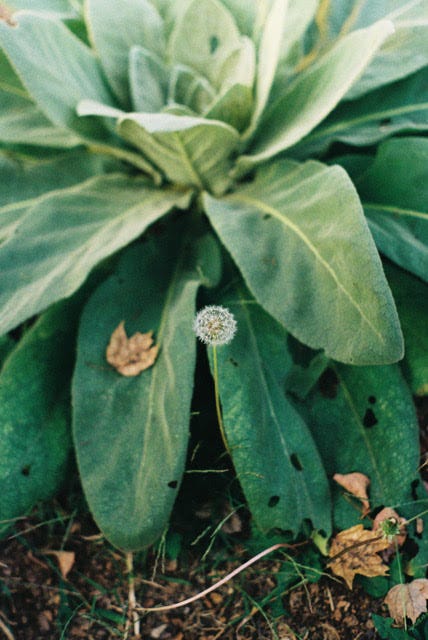
I stole a book [on herbs] from my job and never returned it. I was that desperate. I needed to know what herbs and what blends would work for me. That’s when I was introduced to milky oats. My anxiety used to be so bad where I would shake and almost black out. Milky oats was my first best friend herb, so gentle but so noticeable. Within 15 minutes of taking that simple tincture, I was like woah, I’m here, I can breathe, I can be human again. This is closer to what I imagine it’s supposed to feel like to be human.
How would you describe Conscious Seed?
I create blends that support our nervous systems in a way that helps bring balance and joy and creativity back into our lives when we feel like it’s all gone.
Conscious Seed focuses on the nervous system. All of our remedies work within the nervous system in one way or another to help you feel good from the inside out. That’s very important for me. When I began experimenting with psychedelics, I realized, oh, there are psychoactive effects to plants and it doesn’t always have to be “I’m high.” I started to pay attention to the subtleties of certain herbs.
Which plants were your first teachers?
Milky oats was the big one and still is. That’s the one that’s in our Lion’s Heart tincture. Then I tried rhodiola on its own as well. I started my practice with just experimenting with individual plants. I didn’t go into blends until I started blending my own.
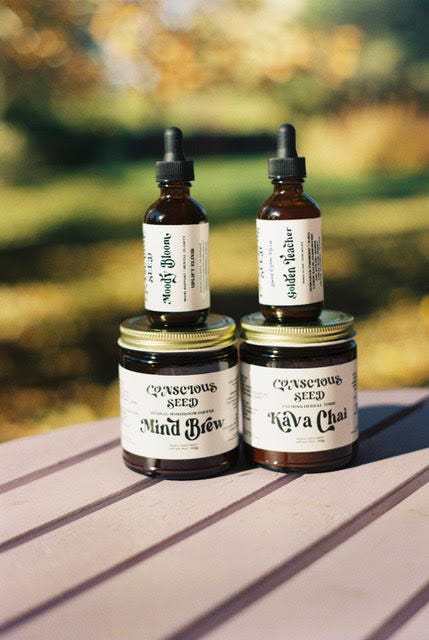
Rhodiola had a kind of psychedelic effect with me. I remember we were at the shop and working 12-17 hour days depending on the day of the week. Being inside for that whole time, I felt stagnant, like what the heck is this world I said yes to? I took the rhodiola, and I remember standing outside and looking at all the palm trees. The greenery just started blooming. The colors turned on and the sky got bluer. (Editor’s note: rhodiola is one of the primary ingredients in Conscious Seed’s Moody Bloom elixir).
Within my herbal practice, I have grounding herbs and I have uplifting herbs. It’s all about finding that equilibrium.
Which other plants or rituals have been instrumental in your healing process?
When we decided to close our café in Florida, I burned out so hard. It took me three years to feel normal again. We moved to a 45 acre farm in Loveland, Ohio. My big idea was that I was going to be an herb farmer. All the herbs I’d grow I would make medicine and remedies with. I did that, but it was just for me. I still felt very shy, very naïve.
So it was another 3 years during which I was growing as many medicinal plants as would grow. That’s when I started learning how to trust and let go, which was really hard for me. That’s a big part of my practice still today — how do I let go?
How do I try and still take action but not hold on so tightly?
The plants really taught me. Some plants really wanted to grow and some plants did not want to grow. I had a lot of heartbreak and lesson through that. I’m not an active farmer, and I don’t even consider myself a gardener. The plants just grow themselves. If they want to be present in my plots, they will be.
How do I try and still take action but not hold on so tightly?
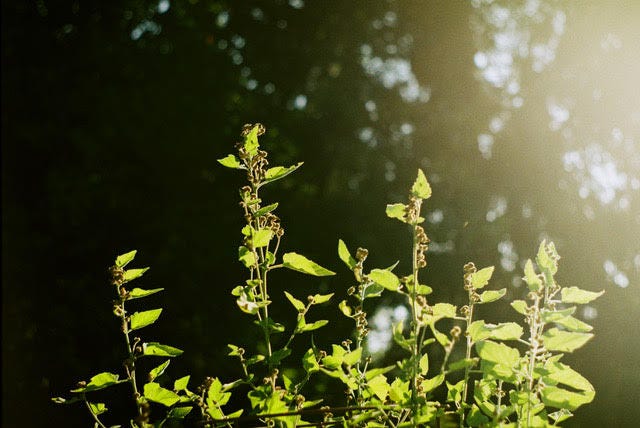
In growing herbs and just being with the land, I could just go and sit with the herbs. Going through the hard times in my life that were present for a long time — I didn’t know they were every going to go away. But I would go to the plants and talk to them like they were my mom. They started nurturing me.
I started witnessing them and paying attention to how they moved and how the sun touched them. It became a psychedelic experience without having to do anything besides being devoted to them and witnessing them.
What is your ethos as an herbalist who’s making blends for thousands of people across the U.S?
I think about capitalism with how I blend, so I like to use as many herbs as I can that are sustainably harvested. I don’t use essential oils, for example, because those take thousands of pounds to create just a few ounces. To me, that’s extractive and not reciprocal. There are certain moments where that’s appropriate, but it’s important that we find that balance, that equilibrium, especially as wellness and herbal supplements are a multi-million dollar industry at this point.
I started witnessing them and paying attention to how they moved and how the sun touched them. It became a psychedelic experience without having to do anything besides being devoted to them and witnessing them.
There needs to be a reciprocal relationship and synergy. How can we use these powerful, wonderful plants in a way that’s not constantly taking?
The term “regulate your nervous system” is really having its moment in popular culture right now. Why do you think that is?
We’re at this point in the world when we need to double dog dare ourselves to think outside the box, especially the box of what people are telling us.
[Regulation] is so unique to all of us. We need to have awareness of ourselves and our tendencies and what our quicksand moments are. To know where we get in our own way.
We’re at this point in the world when we need to double dog dare ourselves to think outside the box, especially the box of what people are telling us.
It doesn’t have to look the same everyday. But bringing in a mindfulness practice and making sure we’re taking care of our mental system — our thoughts, and listening to how we communicate to our thoughts.
Then there’s the physical aspect. I recommend taking walks and just being in silence.
One of the ways we do a disservice to ourselves is by constantly listening to noise. Whether it’s through conversation or listening to podcasts or even music with lyrics.
I find that that can be disruptive to our nervous systems, especially when we’re at the panic moment and we’re gripping at everything.
One of the ways we do a disservice to ourselves is by constantly listening to noise. Whether it’s through conversation or listening to podcasts or even music with lyrics.
In terms of herbs:
On a hard day, you can take three full droppers of our Lion’s Heart and that’s really going to do you good. But the more you take it, the less you actually need. That’s how a lot of these plants work — you don’t need to be dependent.
It’s not a one size fits all. All of our blends are working with nervines in different ways. We have those uppers and those grounding herbs. We have those things that ground your muscles and your mind. Herbs are so multi-faceted. I can take one remedy in the morning and take the same remedy in the evening and it’s different then too.
We change. For female bodies, our chemicals change every two and a half days. We really need to have awareness of that. We create so much stress when we don’t remember that we’re changing all the time.
What’s the role of the plant in processing difficult emotions?
Within in our brains, we have a minute and a half before a feeling turns into a mood. If we can catch it in time, or slow the feeling down, by taking an herb, it allows us to stop or pause.
The plants are here to be our allies, to be our support systems. They are our elders. That’s how I see them. I would love for the world to see it like that — as in, I’m going to take this plant and it’s not going to take away my feelings, like how a friend’s not going to take away your feelings, but it will allow you to have a bit of space to be present and hold both the suffering and joy of the moment simultaneously.
Within in our brains, we have a minute and a half before a feeling turns into a mood.
When you really need it, I recommend taking a plant for two weeks and then going off. Then noticing a difference. Seeing how your body and nervous system reacts. Maybe you notice that your body doesn’t shake. Or you’re more aware of how heavy your heart is beating. That’s why I love plants. They’re not escapes. There is no escape from the feelings.
We need to have peace about the fact that we’re not always supposed to be happy.
I’m really trying to help folks come into the non-dualistic way of thinking. Yes, we have good and we have bad, but how can we find that middle way?
What does wellbeing mean to you?
Wellbeing is being able to be both the holder and the held. Wellbeing is about being as present as possible without holding too hard or too soft. I have a term — soft power. So how can I have softness and power at the same time?
A book you think everyone should read?
Confidence: Holding Your Seat through Life’s Eight Wordly Winds by Ethan Nichtern. Everyone should read this book. It has nothing to do with herbalism.
Also, Naturally, by Rachelle Robinette. A great guide for all levels of herbal-curious and wellness curious folk. She’s a goodie — she’s an OG.
Wellness hot take?
When I’m having a hard time, and I know it’s a physical thing and a mental thing — all the things at once — and I know I still need to show up, I make an adrenal cocktail.
I combine a whole food vitamin C powder, a pinch of high mineral sea salt ( ¼ tsp), and then a little bit of potassium — cream of tartar (1/4 tsp) (coconut water actually has a nice amount of potassium in it).
I make a shot of it, about 4 ounces. It’s really tasty. In there I like to put a tincture or an elixir. I’m a flavor-forward herbalist, and a lot of herbs don’t taste good. But putting it into the adrenal cocktail is fantastic. It’s so awakening and healing and nourishing to the adrenals.✦˚*
Chelsee Joel is the herbalist, astrologer, and earthling behind Conscious Seed. She founded her business to highlight flavor in herbal remedies that enhance daily rituals, nourish the nervous system, and help create a better internal and external world. Her passion stems from a desire to help people feel good from the inside out through herbs and astrology. Everything we do is inspired by our love of syncing with nature’s rhythms and trusting that we can thrive holistically with the right tools. Connect with her:
Recommended reading:
I Checked Myself Into an Ayurvedic Clinic in India

Last month, I visited an Ayurvedic clinic in Mumbai for seven days straight. My aspirations were dual: first, I wanted to understand the ancient Indian medical system in a context that wasn’t my family’s house or a book.

